
You may recognize the situation.
These are the conditions manufacturers describe when they call us — on a first build, on a line that has been running for years, and everywhere in between.
The prototype performed. The build isn’t delivering.
The design proved itself in development. At build, yields, cycle times, or quality are landing somewhere other than plan — and no one can yet say why.
The line is producing. The evidence isn’t creating confidence.
Output meets plan, but the data behind it does not convince a customer, an auditor, or your own leadership. Performance is visible in aggregate and opaque at the process level.
The same issue returns after every corrective action.
Issues get resolved. The same issues return. Performance improves during a focused push, then drifts back once attention moves on. The organization is responsive but not preventive.
The ramp is scaling. The process isn’t traveling with it.
Volume is rising, a second site is coming online, or production is moving to a new contract manufacturer — and the process does not travel intact. What made the first location work lives in the people who built it, so yields differ site to site and every new location re-learns what the last already paid for.
Progress still depends on the same few people.
The people who know how the operation actually works are the ones it cannot afford to lose. The knowledge lives in them, not in the organization.
No one owns the manufacturing outcome.
Engineering, quality, operations, and suppliers each own a part of it. Decisions stall between them. The program needs someone accountable for the complete manufacturing outcome, with the authority to regain control of it.
These are not isolated problems. They can share an underlying pattern — and there is more than one way to start on it.
Three ways manufacturers ask us for help.
Most conversations start in one of three places. None of them requires you to have diagnosed the situation first — that is our work, not yours.
“Are we on the right track, and can we prove it?”
Regain confidence
Independent expert review, challenge, and validation of the plan, the process, and the evidence behind it. We establish what your data actually supports — where it holds, where it does not, and what would have to be true to close the difference. You end with a defensible basis for the next decision rather than a second opinion.
“Can someone stabilize this and move it forward?”
Get it moving
A build that has stalled, a yield issue that will not close, or a ramp that is losing time. Scope, duration, and exit criteria are defined at the start. BuildQM experts work alongside your team on the actual problem, and the engagement ends when the situation is stable and your team can carry it forward.
“Can someone own the direction we’re missing?”
Lead through complexity
Fractional, contracted, or interim manufacturing leadership: a BuildQM expert accountable for the complete manufacturing outcome, from NPI through scale. For organizations that need experienced manufacturing leadership now — across a first program or a scaling production base — and are not yet ready to carry it permanently on headcount.
The pattern behind the problems.
Manufacturing problems are typically treated as operational events — a quality escape, a yield drop, a missed ramp target. Each gets investigated, contained, and closed. Then it returns, or a version of it returns, and the cycle begins again.
The reason the cycle continues is not that the people are ineffective. It is that the underlying conditions that produce the problem — gaps in organizational knowledge, process discipline, data infrastructure, or expert capacity — have not been addressed. The problem was solved. The capability to prevent it was not developed.
That distinction is the foundation of BuildQM's work. Not every problem is a symptom of something larger — many are bounded, and a bounded fix settles them for good. But when a problem recurs after it has been corrected, it may indicate a wider capability gap. Addressing the symptom without closing the gap produces short-term improvement. Closing the gap produces enduring capability.
Some problems are exactly what they look like, and the fix holds. The ones that keep returning are not — those are capability gaps, and they close only when the cause does.
Start with the problem. Connect only what’s needed.
BuildQM begins with the immediate condition and tests the narrowest sufficient explanation — technical, process, people, supplier, ownership, data, or leadership. Where the condition crosses those boundaries, we connect the capabilities required around the complete manufacturing outcome.
NPI
Move from product intent to production readiness — with clear ownership, evidence at each decision point, and execution that holds under real build conditions rather than ideal ones.
Validation
Establish whether the product, the process, and the production system are ready for the conditions they must actually meet — before volume, tooling, or a launch date makes that answer expensive.
Test
Turn test results and operating data into evidence people trust — coverage that reflects real failure modes, and results that support a decision instead of requiring one to be argued.
Scale
Transfer and sustain performance as volume, sites, suppliers, or operating complexity increase — so a line that works in one location works in the next, and yield holds when the people who built it move on.
Supply chain, assembly, and automation and other domain experts are brought in where they are material to the outcome. Our team is shaped by the capability you need to retain or access.
Five capability gaps BuildQM looks for most often.
These are the organizational conditions we see constrain manufacturing performance most often. Identifying which of them are most consequential for your operation is typically where a BuildQM engagement begins.
Proven success at a scale few people have experienced.
NPI and scaling for products you already know
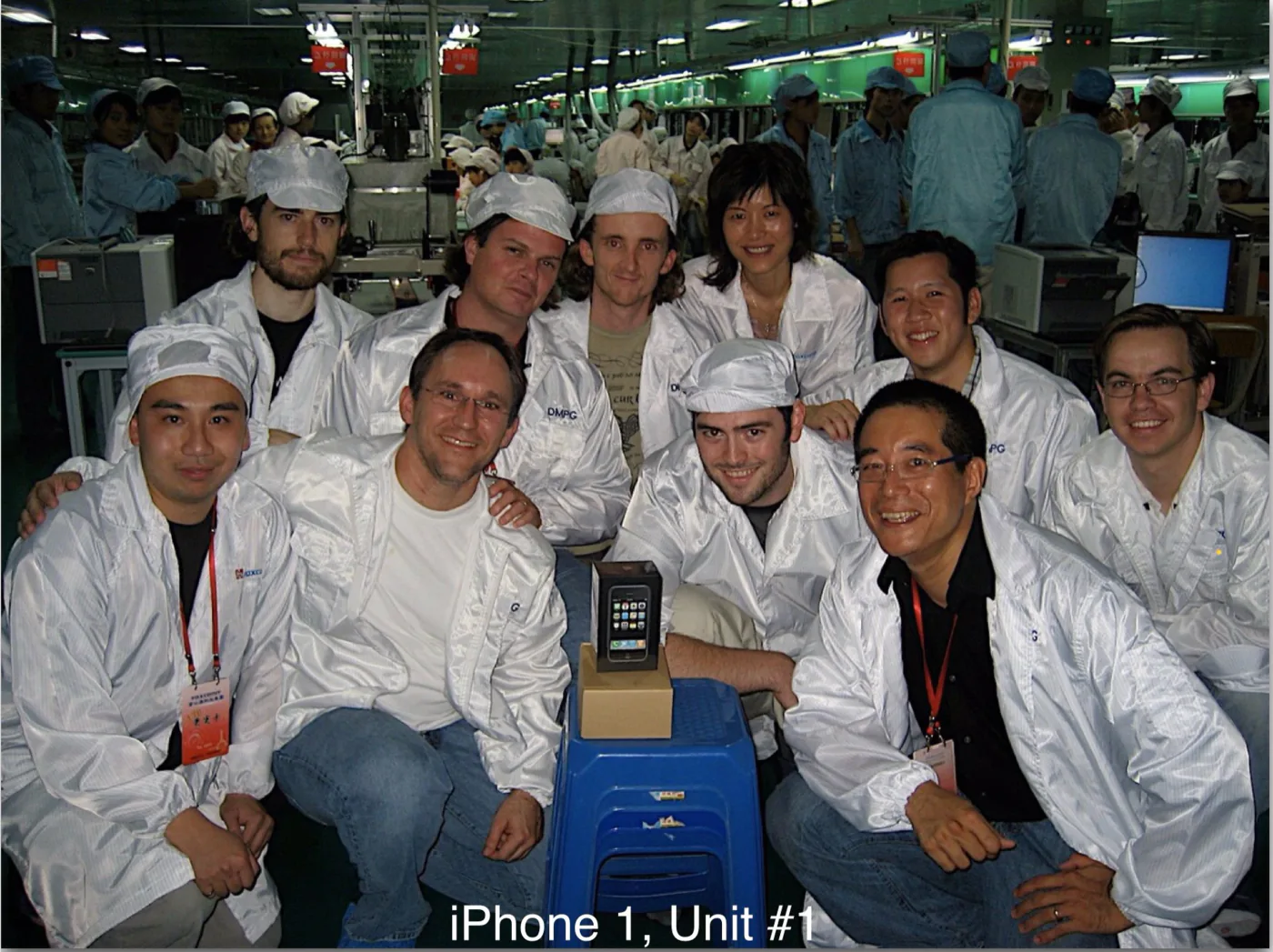
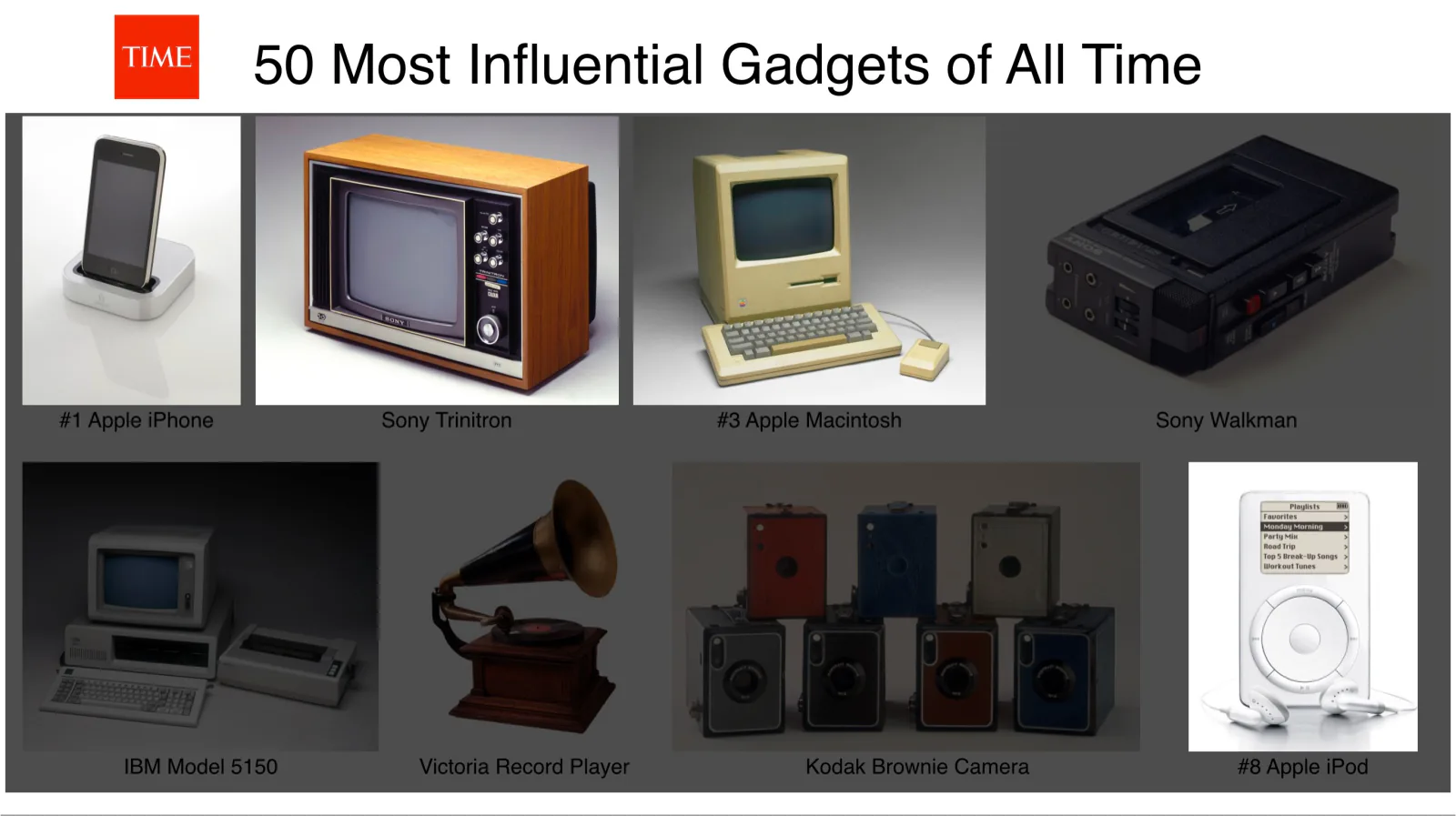
New product introduction and production scaling for the Apple iPhone, iPod, and Macintosh, and the Sony Trinitron. Several members of the original iPhone NPI team are now at BuildQM.
Operations that both scale and are portable
Our team knows what is required to enable manufacturing operations handling a billion complex products a day. We also understand how to efficiently replicate manufacturing to other factories and geographies, to support increasing demand and geo-political realities.
Resolve the moment. Strengthen what remains.
The immediate intervention matters. So does what you can reproduce, sustain, and scale after it ends. The aim is not only to resolve today's condition — it is to leave your organization able to reproduce the result, sustain it without us, and scale it to the next site, the next program, and the next volume step, with continuing access to specialist expertise where retaining every capability in-house would be impractical.
The project concludes. The capability remains.
BuildQM does not just solve manufacturing problems. It helps manufacturers build the capability to solve tomorrow's problems — and the ones after that. Manufacturing capability is not a fixed state. It compounds. The intended outcome of an engagement is to strengthen that foundation for future performance, not just to resolve an isolated incident.
How BuildQM develops manufacturing capability
You cannot reliably improve what you do not yet understand. That principle shapes every BuildQM engagement. Before any intervention, we conduct structured diagnostic work to establish an accurate picture of what is actually constraining a manufacturer's capability. This diagnostic orientation is what distinguishes BuildQM from firms that arrive with predetermined methodologies.
We diagnose before we prescribe.
Manufacturing problems are symptoms. The underlying conditions are capability gaps — absences of organizational knowledge, skill, or system capacity that, when present, prevent the same problem from recurring. BuildQM's diagnostic work identifies those gaps with precision, so that improvement effort is directed at what will have the highest downstream impact — not simply what is most visible.
How an engagement moves
Four structured phases that are consistently applied whether the situation is a first build or long running production line
Recognize
Establish what is actually happening — in your terms and in the operation's own data — before naming a cause. The narrowest sufficient explanation gets tested first.
Stabilize
Take the immediate pressure off: contain the escape, hold the schedule, return a line to predictable behavior. Very little else is useful until this is true.
Connect
Where the condition crosses boundaries, connect the capabilities the outcome requires — from NPI through validation, test, and scale.
Strengthen
Transfer knowledge and capability. Leave the evidence, the process definition, and the team's own fluency behind, so the result can be reproduced, sustained, and scaled without us.
BuildQM focuses on diagnosis, expert collaboration, and data management. Scaling is enabled by the FactoryOS platform and continuing access to the BuildQM MOC. The BuildQM platform and MOC are the foundation of our engagements and the enabler for capability transfer to our customers.
Three ways we develop capability
From the diagnostic foundation, BuildQM works across three integrated dimensions.
Expert collaboration — capability built through doing.
Capability is not transferred through reports. It develops through structured collaboration between BuildQM experts and a customer's own team — working together on the actual operational challenges, building shared fluency in the tools, the data, and the decisions. The objective is not to create dependence on BuildQM expertise. It is to expand the customer's own.
BuildQM FactoryOS — process knowledge that outlasts any individual.
Process knowledge that lives only in people degrades when people leave. Data in silos limits the ability to effectively understand the entire product lifecycle history. FactoryOS captures and structures operational knowledge — at the machine, on the floor, across the organization — so that capability becomes institutional rather than individual. A byproduct of the FactoryOS platform is the implementation of a data fabric with well documented schemas that the customer owns and controls enabling true data sovereignty.
The BuildQM Manufacturing Operations Center (MOC)
Most manufacturers — outside the very largest OEMs — cannot maintain in-house the full breadth of deep tech expertise required across design, NPI, scaling, and sustaining. The BuildQM MOC gives customers access to that expertise under the terms of their engagement: subject matter specialists across R&D, operations, NPI, and production scaling, available as their capability develops. BuildQM experts can advise, collaborate, or take direct responsibility for delivery — based on what the engagement requires — without the overhead of carrying that expertise permanently on your headcount.
What that looks like on your line
The three dimensions above are delivered through purpose-built infrastructure.
Power Tools
BuildQM deploys an on-premises data collection server and a control plane that securely coordinates line test and assembly stations with the factory MES. The production line gets purpose-built infrastructure and processes without requiring a rip-and-replace of what you already have. Your ERP, MES, PLM, and similar systems remain the source of truth — BuildQM integrates with them rather than replacing them.
Operational Intelligence
Continuous automated monitoring of yields, quality, repeatability, and stability — surfacing issues before they become escapes, not after. Production station image management that keeps your process baselines current and auditable. Access to the BuildQM Partner Network and the operational standards it brings, so line stations and third-party tools are built on BuildQM hardened, validated practices.
Draw on the MOC directly, with prepaid credits.
MOC Credits are a low-friction way to access Executive, Expert, and Experienced practitioners in our Manufacturing Operations Center — before a structured engagement. No contract, no SOW, no PO.
The measure of a successful BuildQM engagement is not what was delivered during the engagement. It is the manufacturing capability the organization carries forward independently.
Three kinds of manufacturers. One objective.
BuildQM works with manufacturers at three distinct stages of operational maturity and strategic need — first builds, scaling production, and execution across a portfolio. Across all three, the underlying objective is the same: to develop the manufacturing capability that translates into organizational and competitive strength.
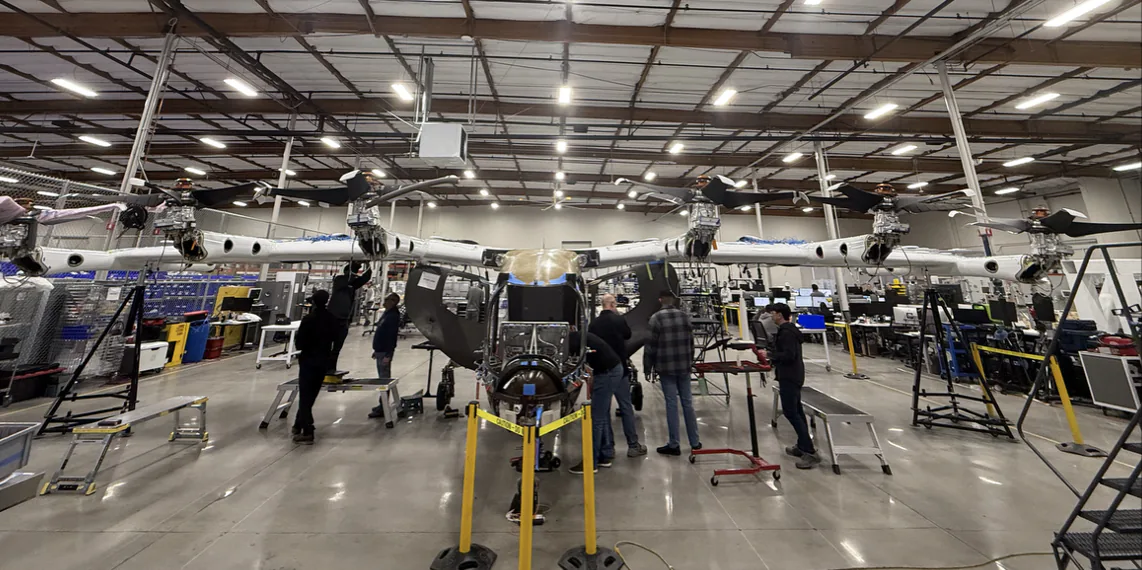
New OEMs
COMPANIES BRINGING NEW PRODUCTS FROM DEVELOPMENT TO MANUFACTURING AT SCALE.
The prototype performed. The first builds are not delivering the yields, cycle times, or quality results the program assumed — and the launch date has not moved. Every answer takes longer to establish than expected, because the evidence needed to settle it was never designed into the process.
Organizations with design capability and a working prototype that are encountering the manufacturing system for the first time. The immediate condition is the R&D-to-manufacturing transition (NPI), which can manifest as missed time-to-market, quality escapes, and higher-than-expected overhead costs. The underlying capability gap is the absence of a structured, data-grounded approach to process validation, scale readiness, and operational discipline.
The organizational systems, process knowledge, and operational fluency to bring new products to scale efficiently — compressing a transition that typically costs manufacturers years of avoidable rework, yield loss, and missed market windows. BuildQM replaces the trial-and-error that most new OEMs absorb with structured capability development built on what the industry's most experienced scaling teams already know.
Established OEMs
COMPANIES WITH EXISTING PRODUCTION WHO NEED TO IMPROVE, ADAPT, OR EXPAND.
Volume is climbing, a second site is coming online, or production is moving to a new contract manufacturer — and the process is not traveling with it. Yields differ between locations, and each expansion re-learns what the last one already paid to learn.
Organizations with operational history, where the condition takes many forms — scaling, quality variability, process introduction, labor skill gaps, new product lines. The gap is the absence of a documented, data-grounded process definition that can be transferred and validated away from where it was built.
Production lines that are portable across manufacturing sites and CM providers, with validation evidence that travels alongside the process so a new site starts from proven conditions. The result is a manufacturing base that can be diversified and geographically distributed on the business's timetable, not on the one the process allows.
Contract Manufacturers
ORGANIZATIONS PRODUCING ON BEHALF OF OTHERS, MANAGING COMPLEXITY ACROSS CUSTOMERS AND PROGRAMS.
The lines are running and programs are shipping, but performance is difficult to explain to a customer asking why their yield has decreased, and harder still to prove in an audit. New business is won or lost on evidence the operation cannot readily produce.
OEM customers expect product specific domain expertise — metrology for an unfamiliar measurement, an assembly process the site has not run before, a failure analysis driven to root cause. That expertise is expensive to carry permanently, and where it exists it is committed to the largest accounts.
Competitive position depends on executing reliably across many products, customers, and compliance requirements at once. Two common capability gaps; Visibility — the data infrastructure to understand, manage, and communicate performance across a complex environment. Expert depth on demand — the product-specific expertise a customer's technology requires, at the point a program requires it, without carrying it permanently for every technology in the portfolio.
The operational intelligence, compliance-ready process infrastructure, and reporting that make manufacturing capability visible and credible. BuildQM Manufacturing Operations Center experts work with your engineering team to bring up the metrology, assembly, and failure-analysis capability a customer's technology demands, and leave it with the site. The result is a contract manufacturer that can quote programs it would typically decline, and serve smaller OEMs at the depth they were promised.
See what the capability gap is costing you.
Our ROI calculator estimates the annual cost of scrap, warranty, downtime, and the overall equipment effectiveness (OEE) gap — plus the leverage you gain from owning your own process data. Enter a few numbers and see the full picture.
Open the ROI CalculatorTry BuildQM on one site with MOC Credits.
Prepaid access to our Manufacturing Operations Center — a proportionate way to prove value on a single line or ramp before deploying the platform.
Start with what you can see.
Our engagements start with a condition, not a diagnosis — a build that isn't landing, a ramp that won't travel, an issue that keeps coming back after every corrective action.
The build isn’t delivering what the prototype promised.
Yields, cycle times, or quality results are landing somewhere other than the program assumed, and establishing why takes longer each time.
The ramp is scaling; the process isn’t traveling with it.
Volume rises, a site or a contract manufacturer is added, and performance does not move intact. Each location re-learns what the last one already paid for.
The same issue returns after every corrective action.
Improvements hold while attention is on them and drift back once it moves. Certain quality, yield, or process issues are managed rather than resolved.
These conditions are symptoms. Underneath them sits a small number of organizational conditions that produce them — and keep producing them until they are closed. Those are capability gaps.
The capability gaps we address
Problems that keep returning are often symptoms. The underlying conditions are capability gaps — absences of organizational knowledge, skill, or system capacity that, when present, prevent the same problem from recurring. Five recur most often in the operations we work with, constraining manufacturing performance and organizational growth across new product introduction and established production alike.
The skilled labor shortage is a knowledge problem, not a staffing problem.
The knowledge your most experienced people carry isn't just a retention risk. When it lives in individuals rather than organizational systems, it is also the reason certain problems recur regardless of how many times they are addressed. Organizations that close this gap — by encoding process knowledge into structured systems and training frameworks — reduce their operational dependence on individual expertise and build a workforce that develops capability over time rather than simply executing tasks.
Operators need the right information at the moment they need it.
Operators on the floor frequently lack access to the knowledge and judgment-support required to make consistent decisions in real time. The result is variable outcomes even from stable processes. Closing this gap means developing the operational systems and knowledge infrastructure that allow operators to make better decisions — turning the floor itself into a capability-building environment.
The transition from development to production is a capability problem, not a handoff problem.
The move from product development to manufacturing at scale is consistently one of the highest-cost failure points in a manufacturer's lifecycle. Closing this gap builds a durable bridge between innovation and production — shortening timelines, reducing yield loss, and developing the organizational muscle to do it faster on every subsequent program.
A process that works where it was built is not yet a process that scales.
Introducing new processes or scaling existing ones without structured capability development produces rework, yield variability, and unplanned downtime at precisely the moment an organization can least afford it. The clearest example is transfer: a line that performs well in its original location moves to a second site or a contract manufacturer, and the yield does not move with it — because the conditions that made it work were held by the people who built it rather than by the process definition. Closing this gap means developing a systematic, data-grounded approach to validating process readiness before scale, and evidence portable enough that the next site starts from proven conditions rather than from scratch.
Hidden risks persist because organizations lack the capability to see them.
Operational risks that are not surfaced are managed rather than resolved. Over time, that tolerance becomes structural — and the organization loses the habit of acting before problems become failures. Process, quality, and supply chain risks hide in plain sight when organizations lack the data infrastructure and analytical capability to surface them. Closing this gap develops both the sensing infrastructure and the organizational habit of acting on operational data — helping manufacturers anticipate rather than recover.
Capability gaps can be measured, closed, and validated. BuildQM helps you identify which ones to close first.
Measured by what you retain
BuildQM is the only manufacturing partner whose primary measure of success is the capability the customer retains after the engagement — not the outcomes delivered during it. This is not a positioning statement. It is an operational commitment that shapes how engagements are scoped, staffed, and concluded.
Most engagements improve performance. Few develop capability.
Most manufacturing consulting and services firms measure success by deliverable completion, uptime improvement, cost reduction, or yield gains achieved during the engagement period. These are legitimate outcomes. BuildQM pursues them as evidence of capability development — not as the end objective.
The distinction matters. Deliverable-focused engagements tend to create reliance on the delivering firm. Capability-focused engagements develop the customer's own ability to sustain, adapt, and extend what was built.
How BuildQM compares
Pure consulting firms and pure platform vendors both have limits. BuildQM operates at their intersection.
Pure consulting firms lack the platform infrastructure to systematize and scale what they build. Pure platform vendors lack the expert depth to develop the operational capability required to use the platform well. BuildQM's integrated model — expertise delivered through platform infrastructure — is the mechanism that makes capability development durable.
The judgment is the product. The platform makes it repeatable.
BuildQM is practitioner-led. What our experts bring first is manufacturing judgment developed on real programs — new product introduction and production scaling for the iPhone, iPod, Trinitron, and Macintosh, and operations handling a billion parts a day for million-phone production runs. That record is the basis of the claim; nothing else is asserted on top of it.
BuildQM FactoryOS does not replace that judgment. It makes it more visible and more repeatable — capturing the evidence a decision rested on, the conditions that produced a result, and the process definition that lets someone else reproduce it. The platform is how hard-won experience travels beyond the people who hold it.
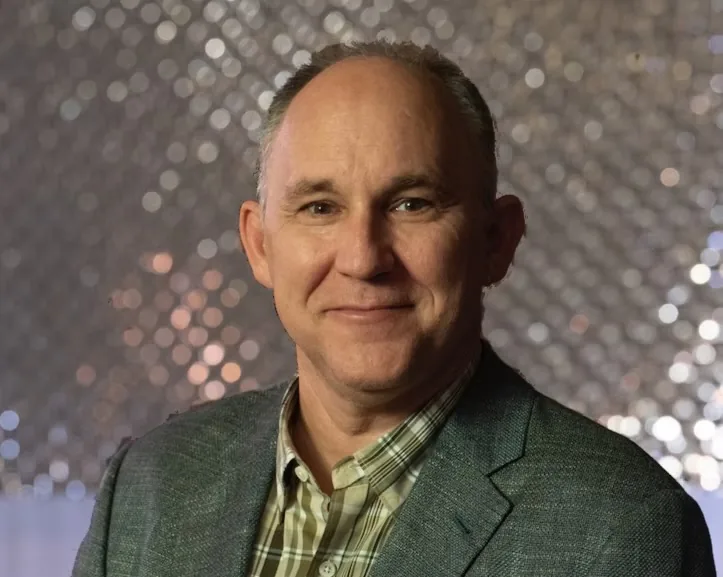
Tony Aghazarian
Tony Aghazarian has spent 25 years solving the problems that stop great hardware from becoming great products at scale. As one of the key architects of Apple's manufacturing infrastructure over two decades, he led new product introduction for the first iPhone, iPad, Apple Watch, AirPods, and Apple Vision Pro — programs that collectively redefined what global-scale precision manufacturing looks like.
At Apple, Tony didn't just ship products. He built the systems that made shipping them repeatable. He pioneered the reshoring of iMac manufacturing to the United States, led Apple's platform transition from PowerPC to Intel, established secure software provisioning infrastructure that sustained zero successful cyber attacks, and scaled operations capable of handling a billion parts per day for million-phone production runs. The NPI approach he developed in 2004 is now considered industry standard.
Before Apple, Tony led NPI and manufacturing process development at Sony Electronics, where he managed the Trinitron Display business and pioneered nearshore manufacturing transitions. More recently, he served as Acting COO at Archer, the electric aviation company, where he led a pivot in short-run monetization strategy and helped convince investors of the company's scaling capabilities.
Tony founded BuildQM because he has lived — at every level — the cost of the gap between engineering intent and manufacturing reality. BuildQM encodes two decades of hard-won expertise into a platform that gives manufacturers the intelligence, discipline, and operational rigor needed to move from first build to scaled production without the failures that have become accepted as normal.
He operates equally at the level of geopolitical industrial policy and factory-floor technical architecture. That range — strategic and deeply hands-on — is what BuildQM brings to every engagement.
The depth behind the founder.
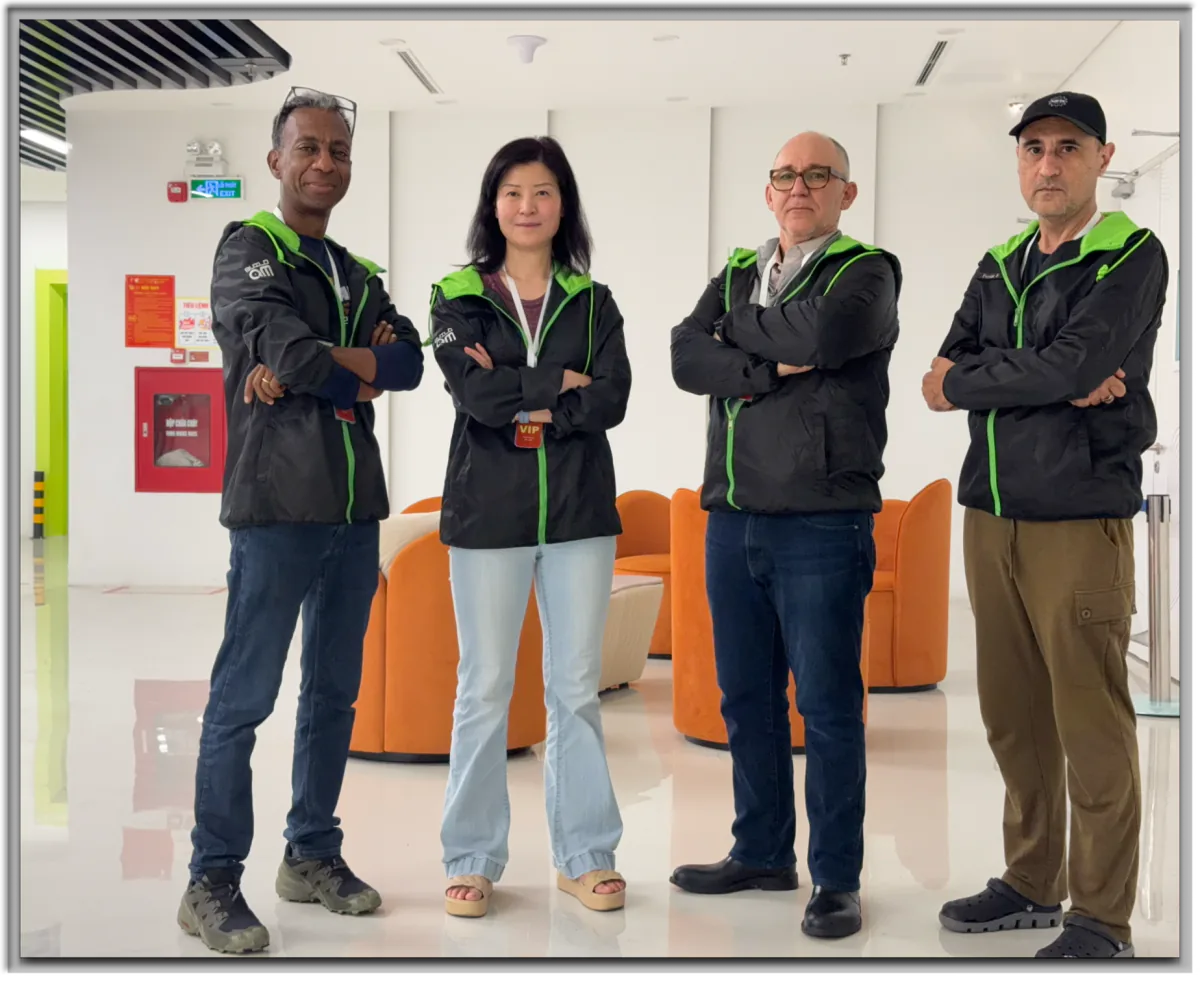
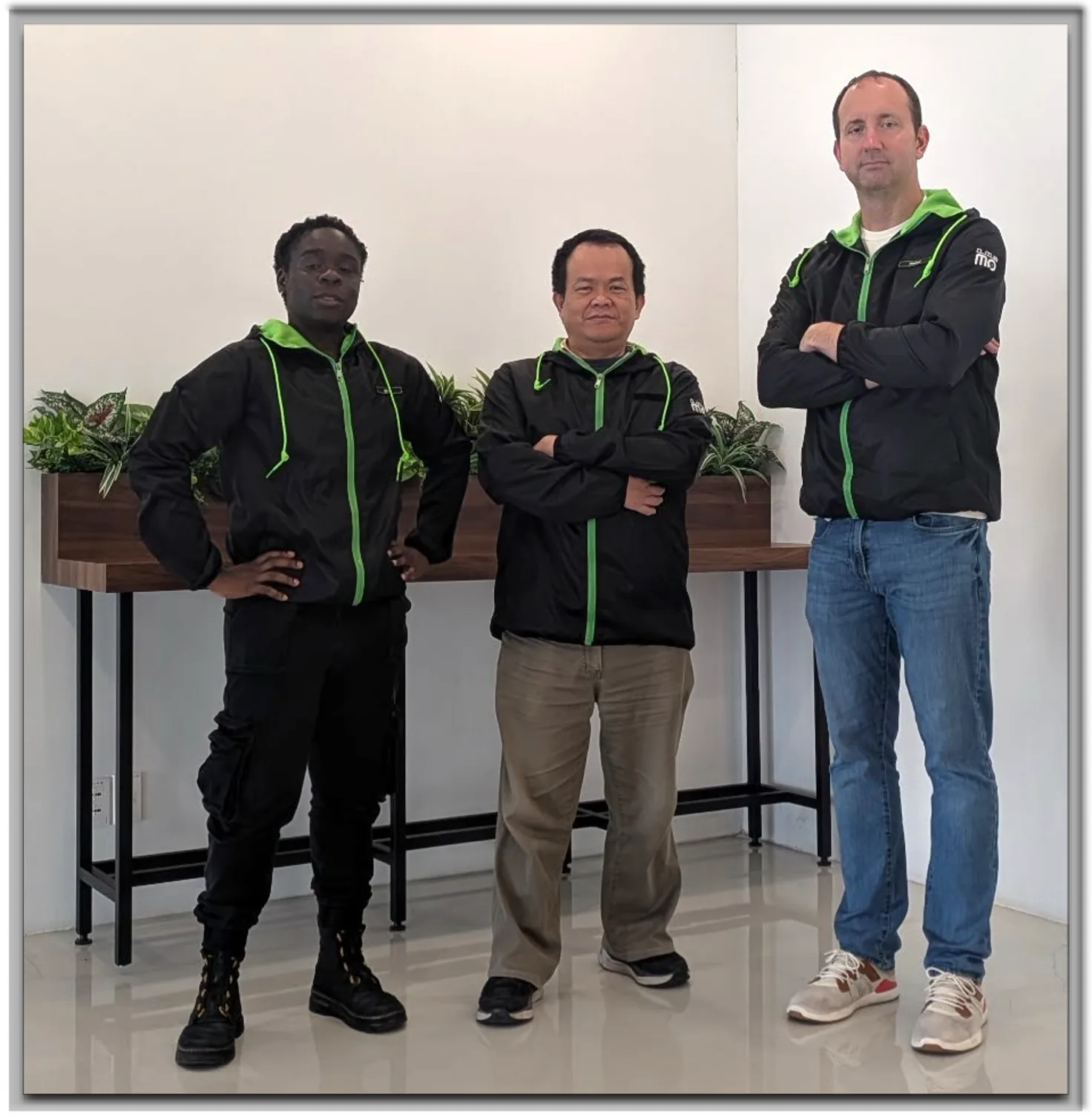
BuildQM is a deep-tech, multidisciplinary team. The capability that lasts is theirs to build, sustain, and extend alongside our customers.
BuildQM is manufacturing capability that lasts.
Because when the knowledge is institutional, the processes are portable, and the data belongs to you — the engagement ends, but the capability doesn't. That is what BuildQM builds. And it is what your organization carries forward, independently, long after we are done.
Prepaid access to the Manufacturing Operations Center.
MOC Credits are prepaid access to BuildQM’s Manufacturing Operations Center — Executive, Expert, and Experienced practitioners across R&D, operations, NPI, and production scaling. Choose a pack, and draw on that expertise when you need it. No contract, no SOW, no PO — one invoice when you buy credits, used when you need us.
Access to the MOC
Executive, Expert, and Experienced practitioners — capability you draw on, not headcount you carry.
BuildQM Analytics tools and expert guidance regarding topics such as NPI, station stabilization, root cause analysis
Support across your factory network — from a stalled line to a production ramp to a new product introduction.
Three ways to start.
Credit packs are priced at $100 per credit and stay valid for 18 months, applied to any MOC mission. Credit pack purchases are made by credit card. C-Suite Partnering is a flat first-month engagement rather than a metered credit pack, and is arranged with our team rather than bought on this page.
Different roles draw credits at different rates.
Each credit represents a unit of access to the MOC. A mission draws on whichever roles it needs; you receive a clear summary of the credits each mission consumed and a running balance of what remains.
Executive MOC
Operating model, governance, and roadmap. Draws more credits per hour — used when you need senior manufacturing leadership and architecture.
Expert MOC
Complex diagnostics, ramp plans, and playbook design. Standard credit consumption — most missions draw on this level heavily.
Experienced MOC
Follow-through, analysis, and coordination. Draws fewer credits per hour — used for ongoing monitoring and execution.
How do credits work?
You buy a pack, we set up your factory and data context, and you draw on the MOC as missions require. Each mission reports the credits it consumed against your balance.
Do credits expire?
Credits remain valid for 18 months and can be applied to any MOC mission.
What is C-Suite Partnering?
A flat first-month executive engagement rather than a metered credit pack — and if you continue with BuildQM after that first month, we credit 50% of the plan toward the follow-on work. It starts with a conversation rather than a checkout: talk to us and we will scope the first month with you.
How do we move to a full BuildQM deployment?
Once you gain the trust and confidence in BuildQM, we propose progressing to a structured engagement and FactoryOS deployment to improve economics and coverage. MOC Credits are intended as a low-friction introduction to BuildQM; formal engagements are where the capability becomes durable.
Where has confidence been lost?
Tell us what is slipping, recurring, or hard to prove — on a new build or a production ramp. We will help establish whether it is a bounded technical problem, a connected capability issue, or another condition entirely, and define a response proportionate to it. BuildQM engagements begin with a conversation, not a proposal.
Regain confidence
“Are we on the right track, and can we prove it?” — independent review, challenge, and validation of the evidence behind the plan.
Get it moving
“Can someone stabilize this and move it forward?” — a build that has stalled, a yield issue that will not close, or a ramp losing time, with scope and exit criteria defined at the start.
Lead through complexity
“Can someone own the direction we’re missing?” — fractional, contracted, or interim manufacturing leadership, from NPI through scale.
Not sure which one? Say so — establishing that is our work. Prefer email? Reach us directly at info@buildqm.com.
Buy prepaid MOC Credits and draw on our Manufacturing Operations Center without a contract or PO.
Start a live video call
Thank you.
A BuildQM expert will be in touch shortly to start the conversation.